LUZALBA brings gyotaku to Portugal’s Atlantic coast through fish printing, natural squid and cuttlefish ink, and recovered textiles. From her Algarve studio, Daniela S.F. turns marine species into precise impressions while keeping the fish within the food cycle.
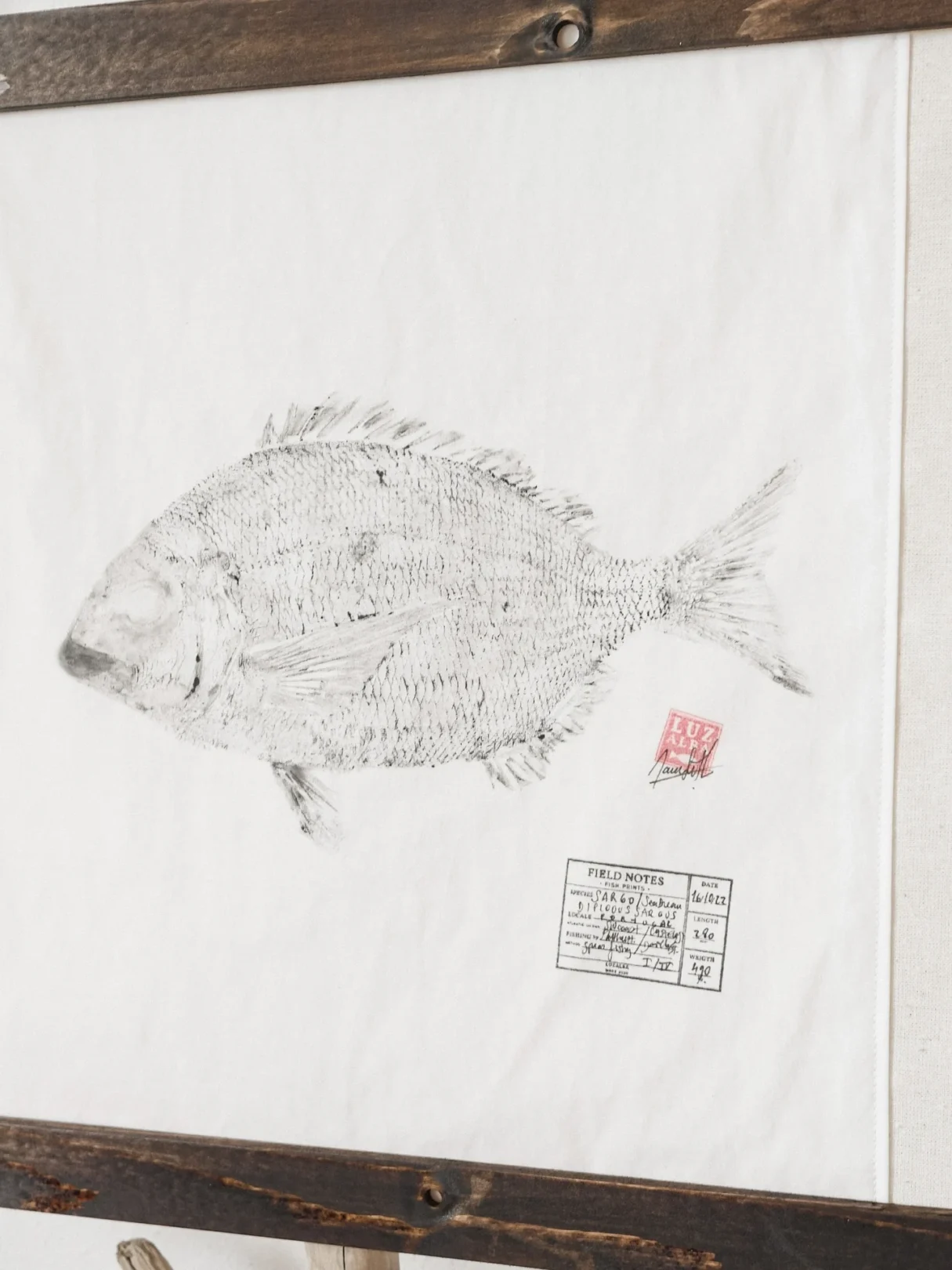
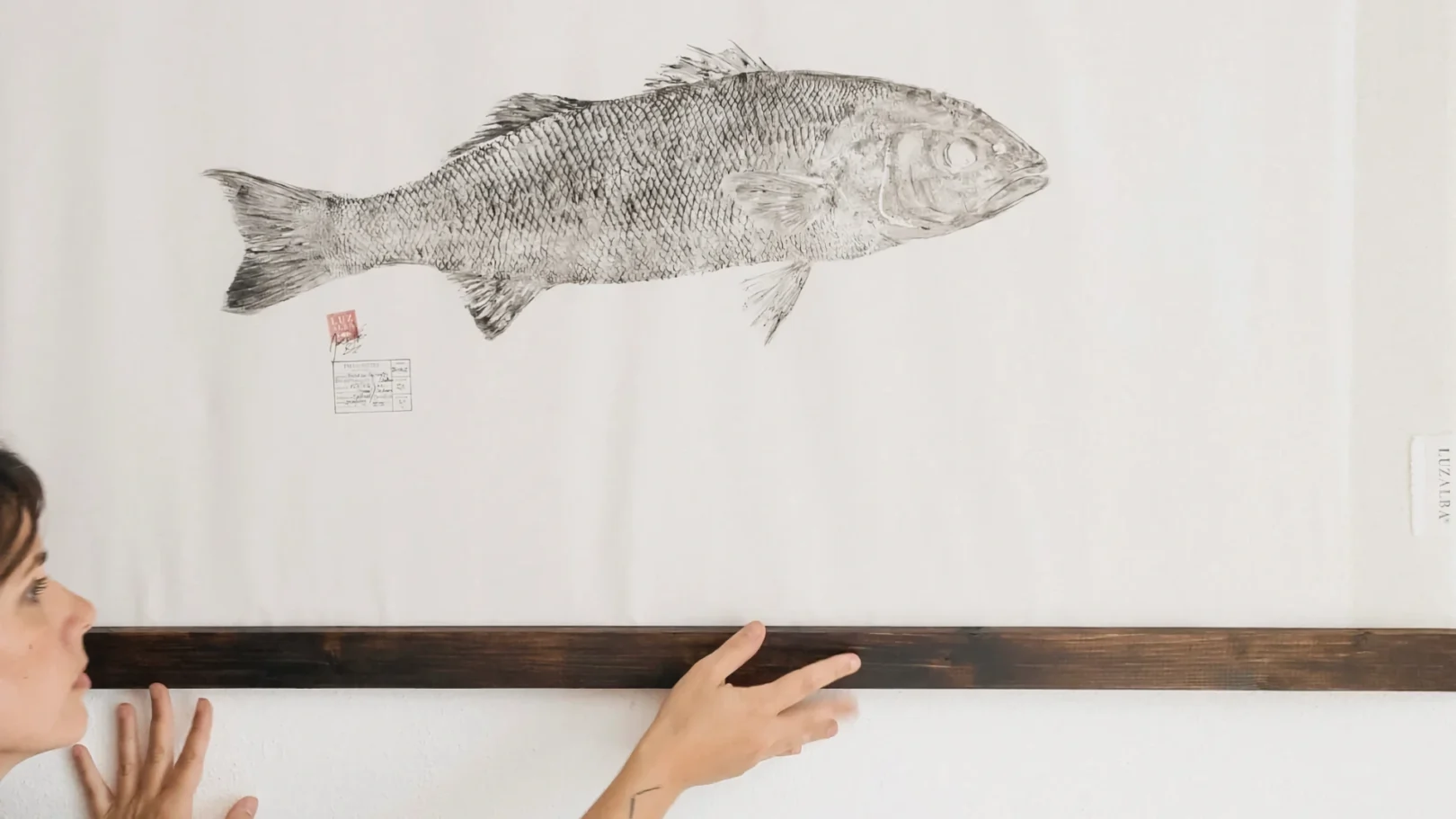
On Portugal’s southern coast, a fish is laid onto cloth and leaves its form behind in dark ink. Scales, fins and the contour of the body appear at full size, accompanied by small irregularities that belong to that particular animal. Afterwards, the fish is cleaned, cooked and eaten.
This sequence sits at the centre of LUZALBA®, the artistic practice founded by artist and designer Daniela S.F. in the Algarve. The Atlantic provides subject, material and context, while the work follows a clear principle: use each resource deliberately, and extend its purpose wherever possible.
Where the Atlantic Leaves a Mark
Daniela returned to Portugal after several years in Venice, where she studied Sculpture at the Accademia di Belle Arti di Venezia and worked within the city’s contemporary art environment, including assisting artists during the Venice Biennale. Before moving to Italy, she studied Ceramic and Glass Design at ESAD.CR in Caldas da Rainha.
Her return to Portugal brought a different scale of attention.
Living close to the Algarve coast, Daniela became increasingly focused on marine biodiversity, fishing practices and the relationship between artistic production and natural resources. The sea entered the work through species, pigment, food and the accumulated knowledge of the people who live from it.
At the centre of this practice are the Fish Prints, developed from gyotaku, the Japanese printing method associated with 19th-century fishermen who applied ink directly to fish to record their size and form. A practical means of documentation gradually entered the field of art.
Daniela retains the physical directness of the technique while relocating it to the ecology and material culture of Portugal’s southern coast.
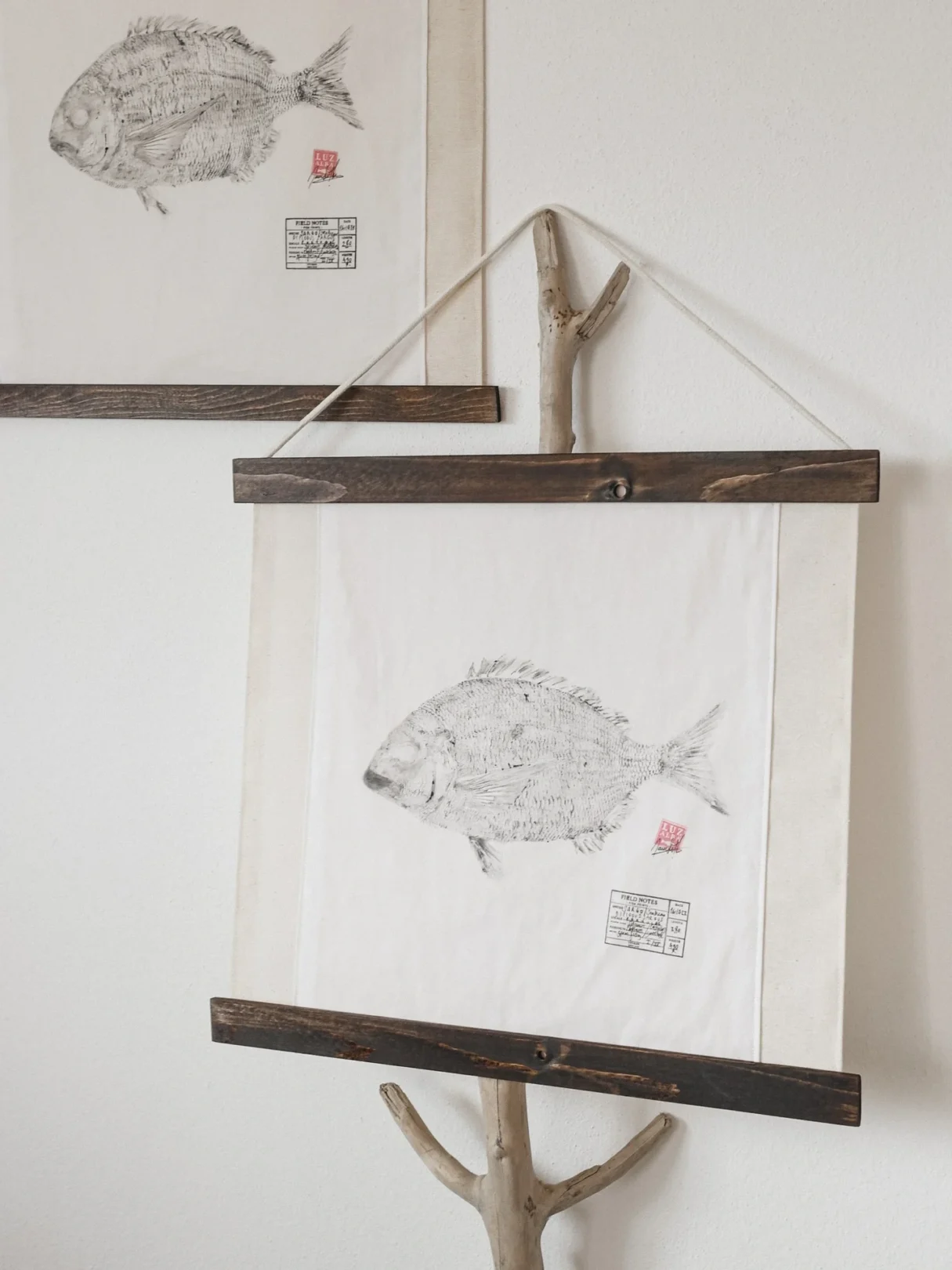
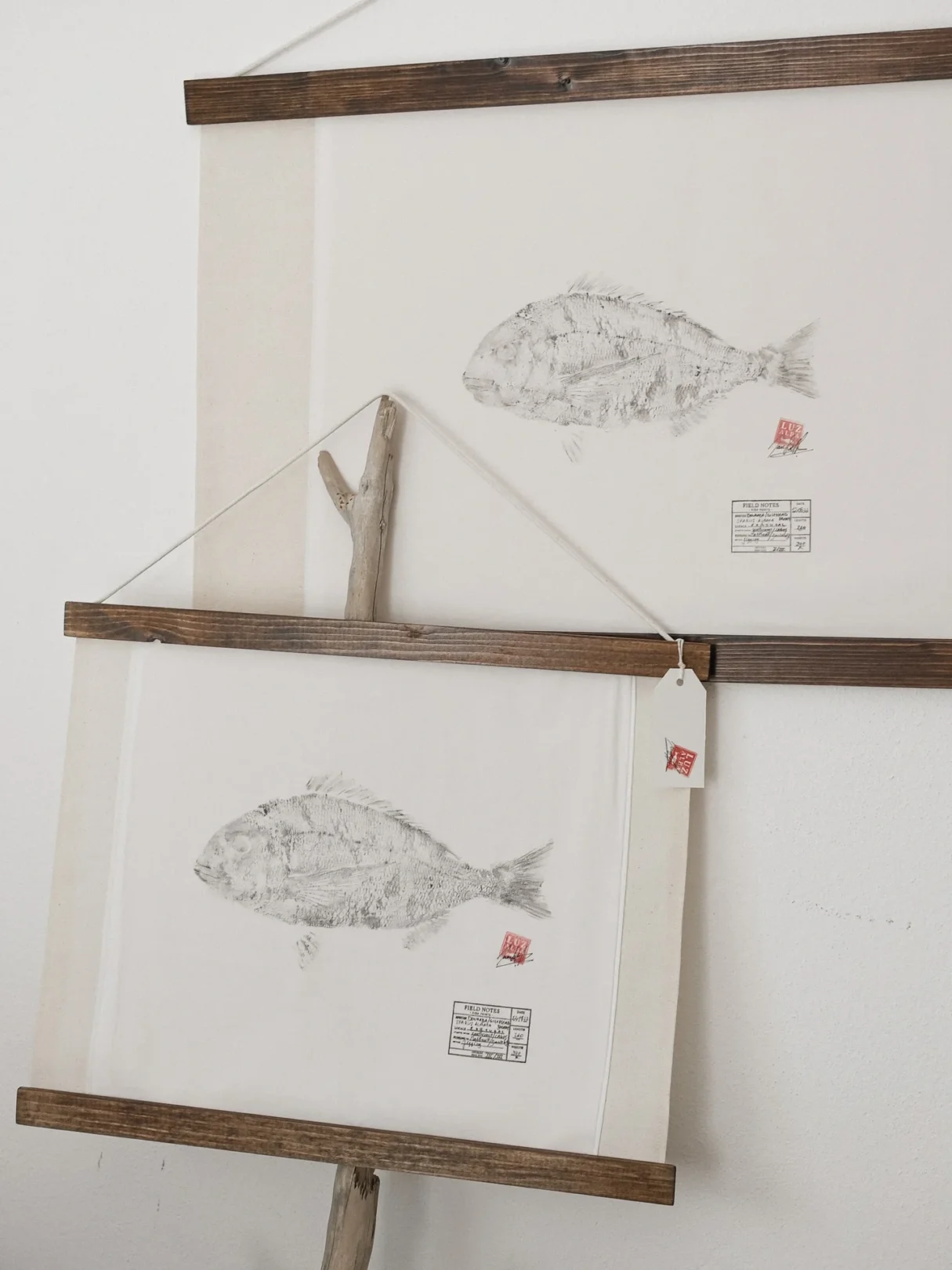
Instead of conventional printing ink, she works with the natural ink of squid or cuttlefish. Impressions are transferred onto recovered textiles and natural linen, allowing fabrics with an earlier use to become part of the work.
The Japanese origin of gyotaku remains visible. Daniela’s contribution lies in placing the technique within another maritime culture, working with the species, materials and habits of the Portuguese Atlantic.
A Body, a Print, a Meal
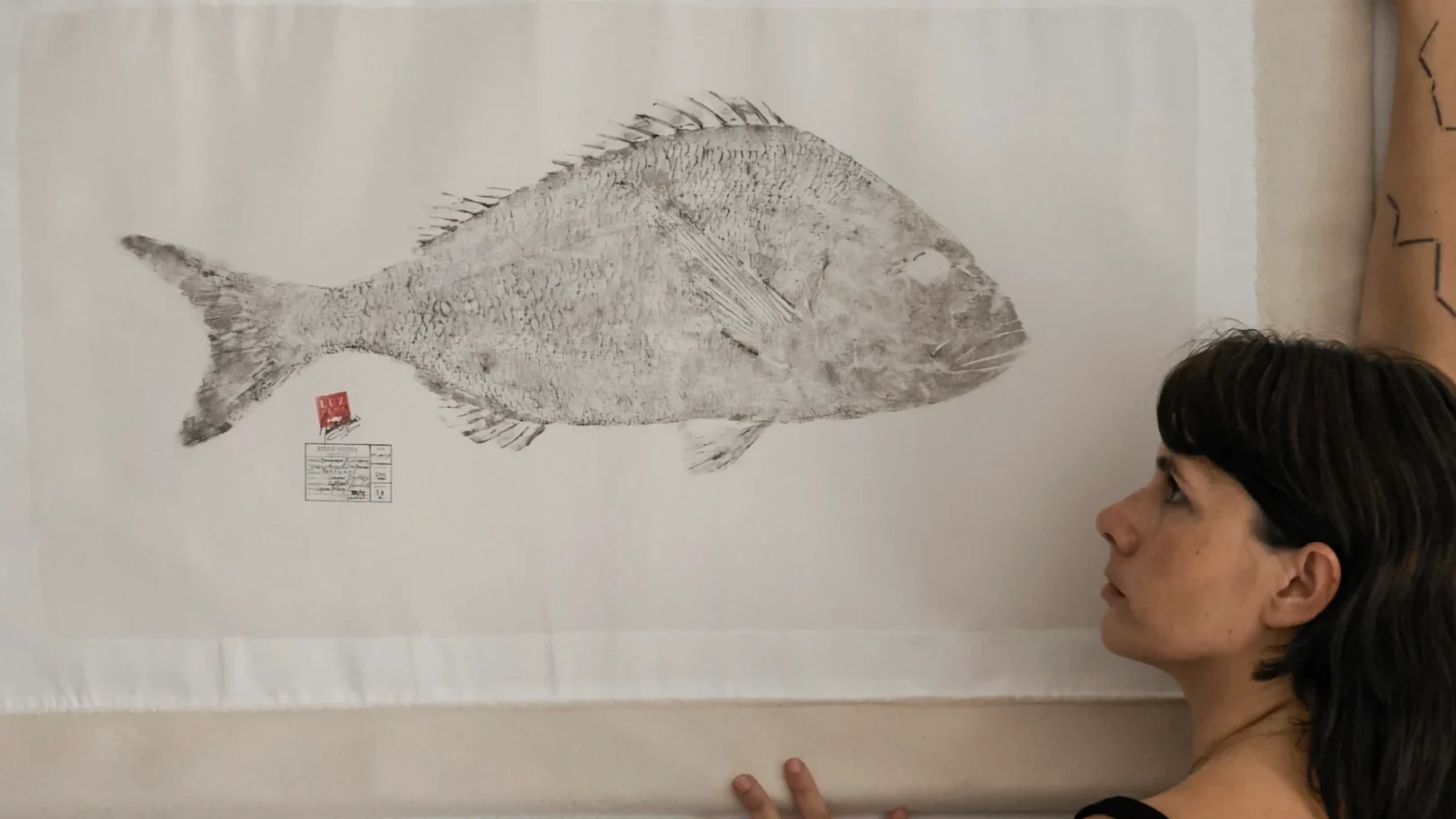
Fish printing depends on contact. Pigment follows the surface of the animal and transfers its physical scale to cloth: the edges of fins, the direction of scales, the particular shape of the head and body.
Pressure, anatomy and the distribution of ink alter every impression. The resulting image carries the precision of a record while retaining the evidence of the hand that made it. Then the fish returns to its original purpose. It is cleaned, cooked and eaten rather than discarded as a studio material. The artwork is produced without removing the animal from the food chain.
“Nothing goes to waste; everything is given another life,”
Daniela explains.
The sentence describes a practical system rather than a slogan. The fish becomes an image and remains food. Squid or cuttlefish ink becomes pigment. A recovered textile receives another use.
This material logic gives the work its authority.
Environmental responsibility is present in the sequence of decisions: what is already available, what function it can serve, and what happens once the work has been completed. The finished piece allows those decisions to remain visible.
Recovered cloth arrives in the studio with a material history already underway. Daniela does not erase it. The print adds another layer: the trace of a marine animal, transferred through pigment drawn from the same environment.
That economy of means also determines the appearance of the work. Fish, ink, textile and hand remain legible. Little is introduced to conceal the process.
There is an archival quality to these impressions.
Each print preserves the scale and physical character of an individual fish, producing a record that sits between image, specimen and memory. The work draws attention to marine species while keeping in view the knowledge surrounding them: fishermen, cooks and coastal communities whose understanding of these waters has been formed through repeated practice.
Portugal and Japan hold distinct maritime histories, yet in both cultures fishing reaches into food, labour and collective memory. LUZALBA creates a point of contact between them without collapsing one into the other.
The Atlantic interpretation is specific to place.
Daniela’s wider practice includes textile works, fine art and handcrafted jewellery, connected by recurring interests in marine life, material transformation and responsible use. LUZALBA is associated with Loulé Criativo, an initiative connecting contemporary creativity with the skills and cultural identity of the region.
Her work has also appeared in documentaries and European television features and is represented in public collections, including the Museu de Vila do Bispo. These contexts extend the discussion around ocean literacy, regional knowledge and small-scale artistic production while keeping the work rooted in the coast where it began.
What the Work Keeps
LUZALBA earns its place in our curation through the coherence of its method.
Daniela takes a printing technique born within another maritime culture and works with it from the Algarve, using marine species, natural pigment and recovered cloth as parts of one continuous system. The origin of gyotaku remains acknowledged; the Portuguese coast determines how the technique is practised here.
For THE PORTUGUESE LIST, the distinction lies in this connection between image and use. The work does not require a separate environmental narrative to explain its position. Its material decisions already do that work.
A fish leaves an image and remains food. A textile carries its previous life into a new one. Ink records the physical presence of an animal and the waters it came from.
What remains is a trace of the Atlantic, held in cloth.