

Some designs seem to transcend time, moving effortlessly through decades and across borders. Olaio’s IK Chair is one of those rare pieces.
Conceived by Italian architect Aldo Jacober in the 1960s, it began as an exercise in pure functionality: a folding chair that was minimal, democratic, and rooted in the ideals of modernist design.
Yet when the Portuguese brand Olaio encountered it, something shifted. They listened to its form, added depth to its voice, and gave it a new language. What had been conceived as a utilitarian object soon became a cultural statement — one with a distinctly Portuguese soul.
The story begins in Italy, amidst a decade marked by bold ideas in art, architecture, and industrial design. Jacober’s folding chair reflected the era’s optimism: simple, purposeful, and intended for the everyday. But its story took a defining turn in 1969, when Olaio, already one of Portugal’s most established furniture manufacturers, began producing the model for the German company Interlübke.
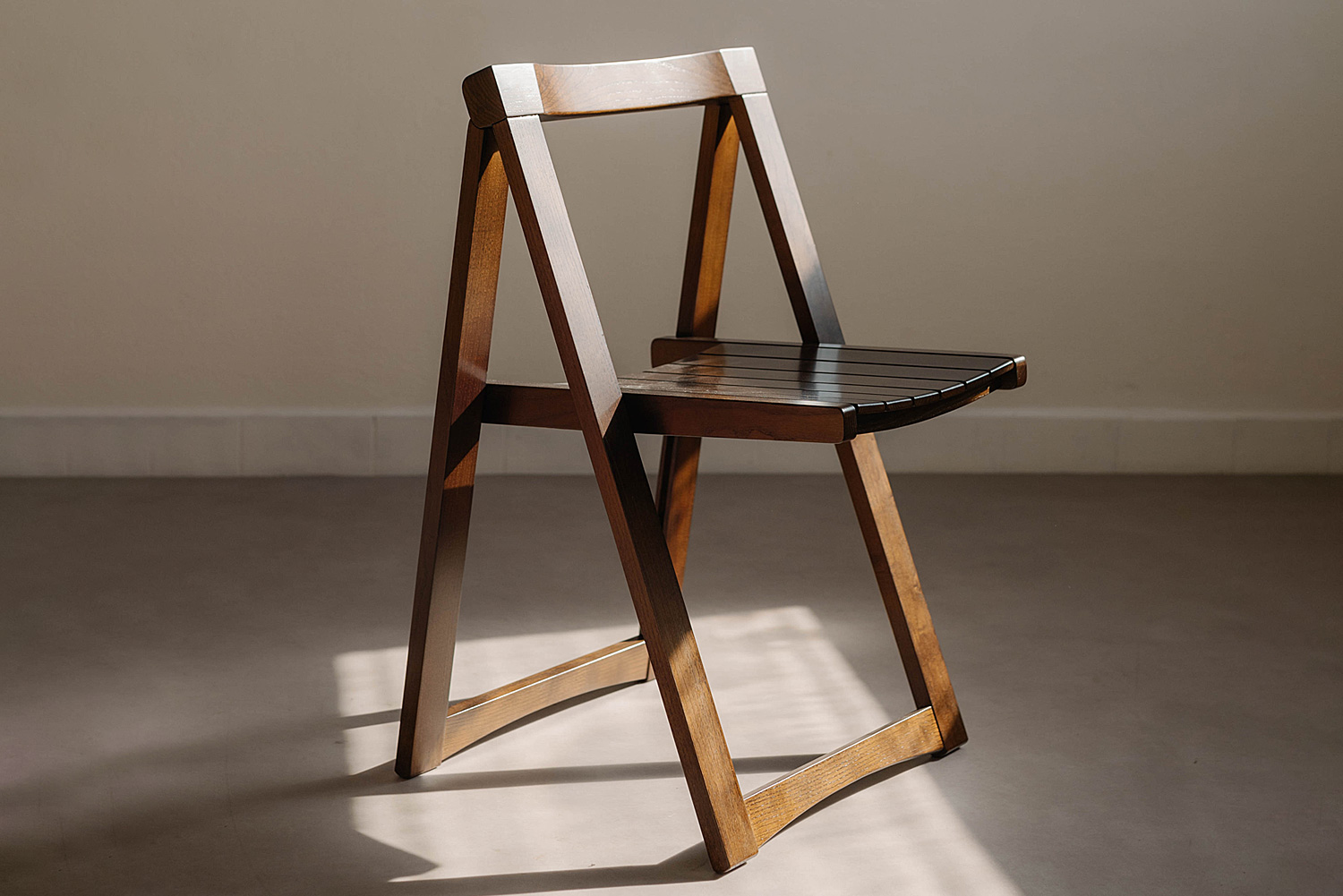
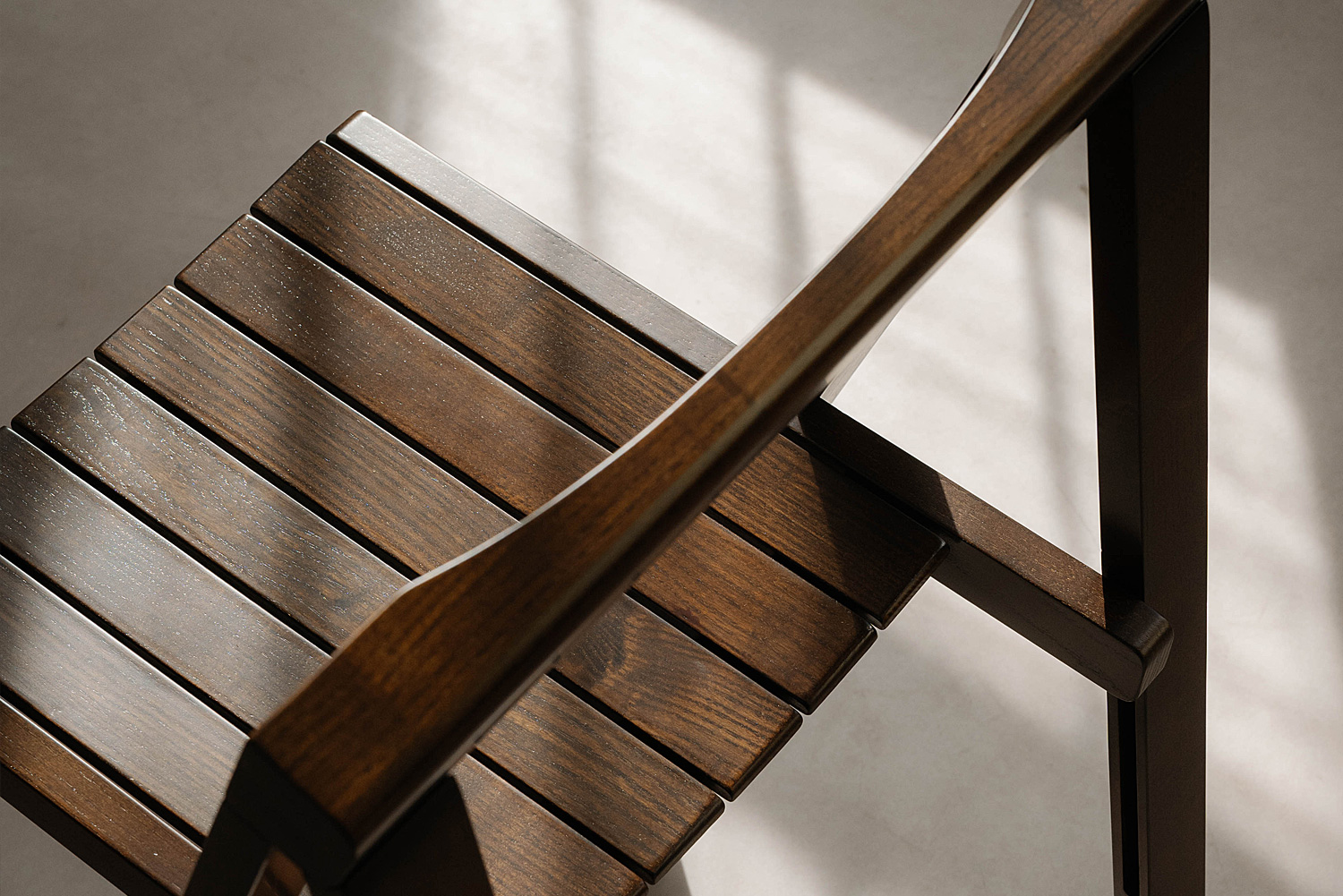
The Portuguese makers did not merely replicate Jacober’s vision; they reinterpreted it. With a deeper seat for comfort, hidden joints that elevated its refinement, and an attention to detail that spoke of craftsmanship, the chair was given a new identity. Olaio infused it with warmth, softness, and the kind of timelessness that is the hallmark of great design.
More than fifty years later, the IK Chair remains in production, still handcrafted in Portugal. Its silhouette continues to follow Jacober’s clean, functionalist lines, but its soul carries Olaio’s imprint, quiet, enduring, and elevated. This combination of international heritage and Portuguese reinterpretation is what makes the chair so compelling today. It is at once a dialogue between cultures and an example of how design can evolve without losing its essence.
Part of this evolution lies in its expressive palette. Olaio has expanded the chair’s identity beyond pure function, offering it in colors that bring character and mood: coral, petrol blue, mustard, brick, soft pink, raw white, forest green, and classic black. Each tone adds another layer of possibility, allowing the chair to inhabit a wide range of interiors. A dining room in Lisbon, a sunlit patio in Barcelona, a café in Berlin, or a design studio in Copenhagen, the IK Chair feels at home in them all. Its folding nature makes it adaptable, its color palette makes it expressive, and its construction ensures that it lasts.

Recognition of its quiet brilliance came recently on the global stage. In 2024, the IK Chair was awarded Best Folding Chair at the Monocle Design Awards. The jury praised it as “an elegant, easy-to-store perch by Portuguese brand Olaio, available in lacquered ash and freijó wood with a cane-woven seat. Expect to see it in smart homes and cultural institutions alike.” For a piece conceived six decades earlier, the award was a testament to its relevance and endurance, and to Olaio’s ability to refine design without stripping it of its essence.
At its core, the IK Chair embodies a philosophy that Olaio has carried for generations: furniture built not for the moment, but for a lifetime. It is a philosophy that resonates deeply today, when so much of the world is cluttered with disposable objects. With its deeper seat, concealed joints, and expressive finishes, the chair has become more than a solution for sitting, it is a statement of intention. A reminder that simplicity, when thoughtfully crafted, doesn’t age or fade.